


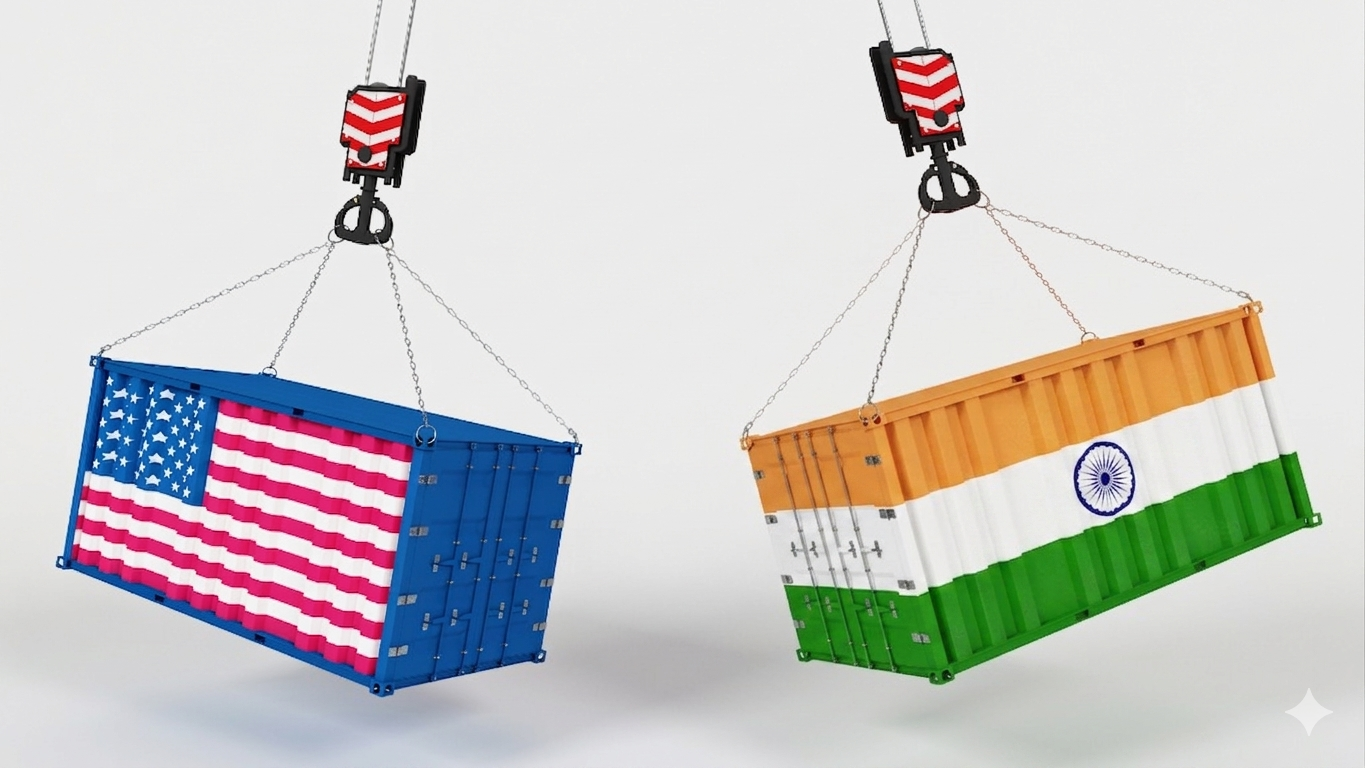
In February 2026, the United States and India reached an interim trade agreement that reduced the effective tariff on Indian exports from 50% to 18%, de-escalating months of trade tensions that had threatened over 55% of India’s $87 billion exports to the US. For exporters, investment promotion agencies and foreign companies with India-linked supply chains, this reset creates both relief and new strategic imperatives. T&A Consulting helps businesses, trade promotion organisations and governments navigate the evolving US-India trade landscape and position for the opportunities it creates.
Introduction: From Escalation to Reset
The US-India trade relationship entered turbulent waters in April 2025, when the United States imposed country-specific reciprocal tariffs on Indian goods. The initial 25% reciprocal tariff was compounded by an additional 25% punitive duty linked to India’s continued purchase of Russian crude oil, bringing the effective tariff on most Indian exports to 50%. This was the highest tariff rate faced by any major Asian economy and sent shockwaves through India’s export sectors, particularly engineering goods, textiles, gems and jewellery, and electronics.
The breakthrough came on 2 February 2026, when President Donald Trump announced a bilateral agreement reducing the tariff to 18%. The additional 25% punitive duty was fully rescinded, and the reciprocal tariff was cut from 25% to 18%. Certain designated products, including gems, diamonds, pharmaceuticals, smartphones, select agricultural products, tea, coffee and handicrafts, now attract zero reciprocal tariffs. In exchange, India committed to moving toward zero tariffs on US goods, halting Russian crude oil purchases, shifting energy sourcing to the US, adopting stronger procurement of American products and removing non-tariff barriers in specific sectors.
What the Agreement Actually Contains
The interim framework covers several dimensions beyond headline tariff numbers:
- Tariff reduction. The effective US tariff on most Indian goods dropped from 50% to 18%. Following a subsequent US Supreme Court ruling, this rate was further reduced to 10% under Section 122 provisions, though the full implications are still being clarified by customs authorities.
- Zero-duty categories. Gems and diamonds, pharmaceuticals, smartphones, select agricultural products (tea, coffee, fruits), and MSME-driven handicrafts now face zero reciprocal tariffs in the US. This directly benefits some of India’s most labour-intensive export sectors.
- Indian concessions. India has offered tariff concessions on alcoholic beverages, cosmetics, medical devices and specific agri-inputs from the US. Limited access has been granted for US agricultural products such as dried distillers’ grains, red sorghum and soyabean oil, while protecting sensitive sectors including dairy, rice and millets.
- Energy and geopolitical commitments. India committed to curtailing Russian crude oil purchases and increasing imports of US energy, technology, agricultural products and coal. The 25% tariff on Russian petroleum products imposed on India was terminated on 7 February 2026.
- Ongoing negotiations. The February 2026 agreement is an interim framework. Full bilateral trade agreement (BTA) negotiations are ongoing, covering agricultural market access, intellectual property protections (especially for pharmaceuticals), digital trade rules and defence procurement.
Impact on Indian Exporters and Key Sectors
The tariff reduction has immediate implications across India’s major export sectors:
- Engineering goods and electronics. India’s largest export category to the US, engineering goods saw order inflows stall during the peak tariff period. The reduction to 18% (and potentially 10%) restores competitiveness, particularly for auto components, industrial machinery and electrical equipment.
- Textiles and apparel. India’s textile exports to the US, valued at approximately $9 billion, were severely impacted by the 50% tariff. The reduced rate makes Indian textiles competitive again against Vietnam, Bangladesh and Cambodia, though the tariff differential remains a factor.
- Gems and jewellery. The zero-tariff designation for gems and diamonds is a significant win. India processes over 90% of the world’s diamonds and is the largest exporter of cut and polished diamonds to the US.
- Pharmaceuticals. Zero reciprocal tariffs on pharmaceuticals protect India’s position as the world’s largest generic drug supplier to the US, a market worth approximately $8 billion annually.
- MSMEs and handicrafts. The zero-tariff treatment for handicrafts benefits India’s vast MSME sector, which accounts for approximately 45% of total manufacturing output and employs over 110 million people.
Implications for Foreign Companies and Supply Chain Strategy
The US-India tariff reset reshapes the “China plus one” calculus for multinational companies. At 18% (or 10% post-SCOTUS), India’s tariff rate is now lower than China’s effective rate for many product categories, particularly those subject to Section 301 tariffs (45%+). This positions India as an increasingly attractive alternative manufacturing base for companies serving the US market.
However, the interim nature of the agreement introduces uncertainty. Companies building long-term supply chains need to assess the risk of tariff changes as negotiations continue. The ambitious scope of India’s commitments, including the $500 billion purchasing pledge (relative to India’s total annual government budget of $590 billion), suggests that some elements may be renegotiated or phased over time.
For companies already operating in India or considering India entry, the key strategic questions are: Which product categories benefit most from the current tariff structure? How durable is the 18% (or 10%) rate? What is the timeline for the comprehensive BTA? And how do the India-UK CETA, India-EFTA and other trade agreements interact with the US framework to create multi-market access advantages?
Implications for Trade Promotion Organisations and IPAs
- Update trade facilitation messaging. IPAs and export promotion bodies should quantify the tariff savings under the new framework and communicate them to exporters and foreign buyers.
- Target US companies for India sourcing. The tariff reset makes India-sourced goods more cost-competitive for US importers. IPAs should proactively identify US companies that could benefit from India sourcing in sectors like auto components, textiles, electronics and chemicals.
- Monitor ongoing BTA negotiations. The interim agreement will evolve. Trade promotion organisations should track negotiation developments and advise their stakeholders on emerging opportunities and risks.
- Leverage the zero-tariff categories. Focus export promotion efforts on the product categories that now enjoy zero reciprocal tariffs, including gems, pharmaceuticals, handicrafts and select agricultural products.
- Address non-tariff barriers. India’s commitment to removing non-tariff barriers creates opportunities for US companies entering the Indian market. IPAs should facilitate introductions and help navigate the evolving regulatory landscape.
How T&A Consulting Supports Trade Strategy
T&A Consulting provides comprehensive trade advisory services for businesses, export promotion bodies and governments navigating the US-India trade landscape:
- Trade agreement impact assessment. We quantify the commercial impact of the tariff changes on specific products, sectors and supply chains, helping companies make informed sourcing and investment decisions.
- Market entry and export strategy. We design market entry strategies for Indian exporters targeting the US and for US companies entering India, incorporating the latest tariff frameworks and trade agreement provisions.
- Supply chain advisory. We advise multinational companies on India-based manufacturing and sourcing strategies, including PLI scheme eligibility, state-level incentives and logistics optimisation.
- Policy monitoring and advisory. We track ongoing BTA negotiations and regulatory changes, providing timely updates and strategic guidance to our clients.
The US-India trade reset is not an endpoint. It is the beginning of a new phase in the bilateral commercial relationship. The companies and organisations that understand the nuances of the interim framework and position themselves accordingly will capture the greatest value as the relationship evolves.
Contact us at: pnijhawan@taglobalgroup.com to discuss how the US-India trade reset affects your business strategy.
Sources & references:
India Briefing,
ClearTax,
Morgan Lewis,
PIB,
Tariffs Tool